Ontario man who pimped out and impregnated a teen sentenced to one more day in jail
By Chris Lambie
National Post - Canada · 1d ago
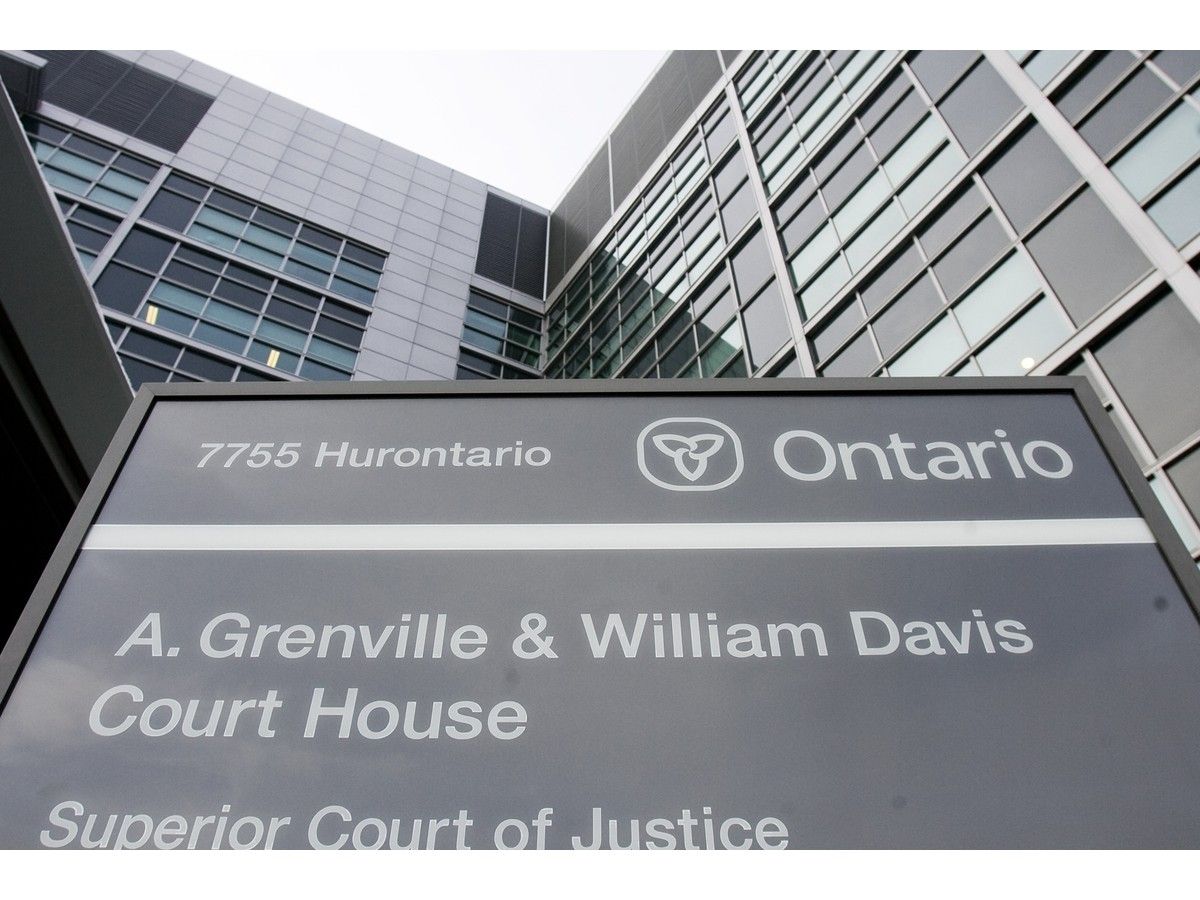
An Ontario man who pimped out an 18-year-old and then later impregnated her was recently sentenced to one additional day in jail on top of what he’d already served.
Hamed Khogyani, 47, pled guilty in Ontario’s Superior Court of Justice to procuring her to offer sexual services between April 2015 and March 2018, and obtaining a material benefit knowing it was a crime.
Khogyani had spent 271 days behind bars before his sentencing. But the judge credited him with having served 557 days of pre-trial custody, noting Khogyani was on house arrest bail for 596 days before his sentencing and also spent time in harsh conditions at a Milton, Ont., jail.
“He served 44 days of his sentence in lockdown at the Maplehurst Detention Centre. He was also triple bunked for 49 days. He is entitled to mitigation of his sentence for that fact. The terrible conditions of incarceration which persist at that institution are all too well known in this jurisdiction,” Justice Michael Derstine wrote in a recent decision.
The court heard Khogyani convinced the woman to work for him in the sex trade in 2015, when she was 18 and he was 38.
“The two engaged in a sexual activity,” and she eventually agreed to work for Khogyani, said the decision, which notes they began living together in Richmond Hill.
She was already working in the sex trade before they met, said the judge, “and he took advantage of her youth and drug addiction to perpetrate the crimes for which he has pled guilty.”
She “worked out of the Homewood Suites in Vaughan and other hotels in the area,” said the decision.
Khogyani would drive her to the hotels or pay for her Uber and supply her with drugs.
She “provided money earned through the sex trade to Khogyani,” said the decision.
When she didn’t want to prostitute herself, Khogyani “would influence her to continue working in order to earn more money,” said the decision, which notes she continued using drugs and alcohol.
Khogyani took photos of her “that were used in sex trade ads,” said the decision.
She “eventually became pregnant with Khogyani’s child,” it said.
While pregnant, she moved into Khogyani’s family home.
He “influenced (her) to continue to work in the sex trade while she was pregnant and after giving birth to their child by convincing her that they needed the money for their family,” said the decision.
They argued, and she eventually left the relationship.
“It is agreed that during the two-year period she worked in the sex trade for Khogyani, she earned at least $20,000 and turned over that money to him.”
When the woman met Khogyani, she “was in a very vulnerable place in her life,” said the decision.
“She felt like she had few options and from the beginning she believed what he was telling her. With the benefit of hindsight, she can see how his manipulation started almost immediately. He would criticize her appearance sending her videos and the like for her to improve her appearance. He made her feel as if she was never good enough.”
Khogyani’s comments “created years of insecurity and self-doubt,” said the decision.
“By the time she left him she could barely go grocery shopping without having an anxiety attack. She constantly heard his voice in her head criticizing her and making her doubt herself. He played a significant role in her addiction by providing substance and encouraging their use and normalizing that lifestyle throughout their relationship. She has a strained relationship with the daughter she bore to the accused and tragically her daughter reproaches her for having her father be in custody.”
The age gap between the woman and her daughter is similar to the one between her and Khogyani, she testified.
“As a mother, I cannot imagine pursuing someone that young. It has made me realize even more clearly how predatory his behaviour was. I was young and vulnerable and this allowed me to be manipulated, isolated, and exploited for his own benefit,” the woman said.
She asserted that the damage Khogyani caused can’t be measured by the years she spent with him.
“It includes the years of treatment, the loss of confidence, the trauma, the anxiety, the impact on my parenting, the damage to my relationship with my daughter, and the lasting effects on my daughter and family,” she said. “While I am proud of how far I have come, I should never have had to fight so hard to recover from the harm he caused.”
She asked that the sentence imposed on Khogyani “reflect the seriousness of the harm caused and the lifelong consequences that continue to affect me and my family.”
The Crown argued he should be sentenced to three to four years behind bars, less credit for time served. Khogyani’s lawyer “asserts that given the time he has served and the mitigation from aspects of his time in custody and on bail, he has served sufficient time and ought to be released,” Derstine said in his July 17 decision.
Khogyani’s lawyer said his client turned his life around after his daughter was born in 2017. He was working as an assistant operations manager at a housekeeping company when he was incarcerated in October 2025.
The judge sided with the defence, pointing out that Khogyani has had sole custody of his daughter since 2020, and helps to care for his elderly parents.
Khogyani was born in Saudi Arabia. He moved to Canada with his family when he was 17. His parents both live in Mississauga and have significant health issues. The father is 91 years old, and has dementia and heart disease, requiring full-time supervision and care, while the mother has Parkinson’s disease, heart disease and has suffered from strokes.
“Despite those issues his mother is currently acting as the primary caregiver for both her husband and the nine year old daughter of the relationship between he and the victim,” the judge said.
It isn’t “necessary to incarcerate him further,” said the judge, adding that the “principle of restraint” played a role in his decision.
“I therefore sentence him to one day in custody.”
Before Khogyani was incarcerated, he was “residing with his parents and was contributing significantly to their care,” said the decision. “His departure has put the family under enormous strain as his mother has had to take up the reins even in the context of her poor health. The loss of income that he was earlier providing was also difficult for his parents.”
His daughter “has not been doing well since” Khogyani has been in custody, said the decision.
“The principal at her public school swore an affidavit indicating among other things that her separation from her father appears to have exacerbated her pre-existing issues. She reports that the accused was present and actively engaged in the raising of his child and participated actively in her life at school.”
Khogyani expressed “his sincere remorse” and accepted “full responsibility for the actions that led to his convictions,” said the decision.
“He asserted that he deeply regrets the decisions that he made and accepts responsibility for his participation and the consequences which have followed.”
He described “raising their child and how this has been the most important responsibility of his life,” said the judge. “He spoke of the fact that over the last 10 years he has worked to live a responsible and law-abiding life. I accept that he was being sincere and remorseful for his actions.”
This is “an unusual case” in that Khogyani and the woman “lived together and had a child together and were in many respects in a committed relationship during the currency of most of the crimes to which he has pled guilty,” Derstine said. “The defence asserts that this places him on the lower end of the continuum of severity because their relationship was not purely commercial and not purely exploitive. The difficulty I have with this submission is that encouraging someone with whom you are an intimate partner relationship to continue to sell sexual services for money has elements of a breach of trust which sit uncomfortably with a mitigating aspect for sentencing.”
On the flip side, they were “in a committed relationship and it appears that a substantial amount of the money that was earned went into paying common expenses in that relationship,” said the judge. “This was not a situation where the perpetrator was buying luxury goods while his victim worked in squalor and hotel rooms. The victim in this case did perform work in hotel rooms but for much of her time stayed in a house with the offender.”
There’s no indication Khogyani “used violence against the victim and no indication that he confined her,” said the judge. “He did persuade her to work when she did not want to but persuasion, even if morally odious, is not the same as confinement. He persuaded her to work while she was pregnant, and I take this as an aggravating feature.”
“Fundamentally, given the passage of time of some nine years since the date of the offence and his pro social life since then, combined with the very real need of his parents and child to see him no longer in custody, considering his guilty plea, his remorse, his lack of criminal record, and his support in the community, I find that it’s not necessary for him to serve further time in custody to fulfil the goals of sentencing,” Derstine said.
- Judge says it would be 'cruel and unusual' to send Ontario man who sexually assaulted 12-year-old sister to jail
- Five-year sentence cut in half for armed carjacker because pre-trial custody was 'harsh and demeaning'
Our website is the place for the latest breaking news, exclusive scoops, longreads and provocative commentary. Please bookmark nationalpost.com and sign up for our daily newsletter, Posted, here.
Originally published by National Post - Canada.